When an Indiana police department, fire department, EMS service, municipality, school, utility or business purchases communications equipment, the radio itself is only part of the decision.
Does the equipment meet your requirements? Is the price competitive? And who will handle programming, maintenance and repairs after the purchase?
J&K Communications has been helping Indiana organizations make those decisions for 50 years.
J&K started in Columbia City in 1976 as a family-owned communications business. We remain family-owned and operate from four Indiana locations:
Columbia City | Fort Wayne | Kokomo | Indianapolis
Our technicians install, program and repair equipment, maintain radio systems and support communications infrastructure. Our sales and service teams work directly with agencies and businesses throughout Indiana.
Local service is useful only if the equipment and pricing also make sense.
The goal is straightforward: equipment that meets the requirement, pricing that makes sense and support that is available when needed.
For agencies comparing radio systems, the manufacturer’s name is one factor. Supported features, total cost and the service available locally deserve just as much attention.
Better Products: Capability Without Compromise
A lower price only matters if the radio meets the agency’s operating requirements.
Start with bands, protocols, system compatibility, encryption and required features. Then compare pricing.
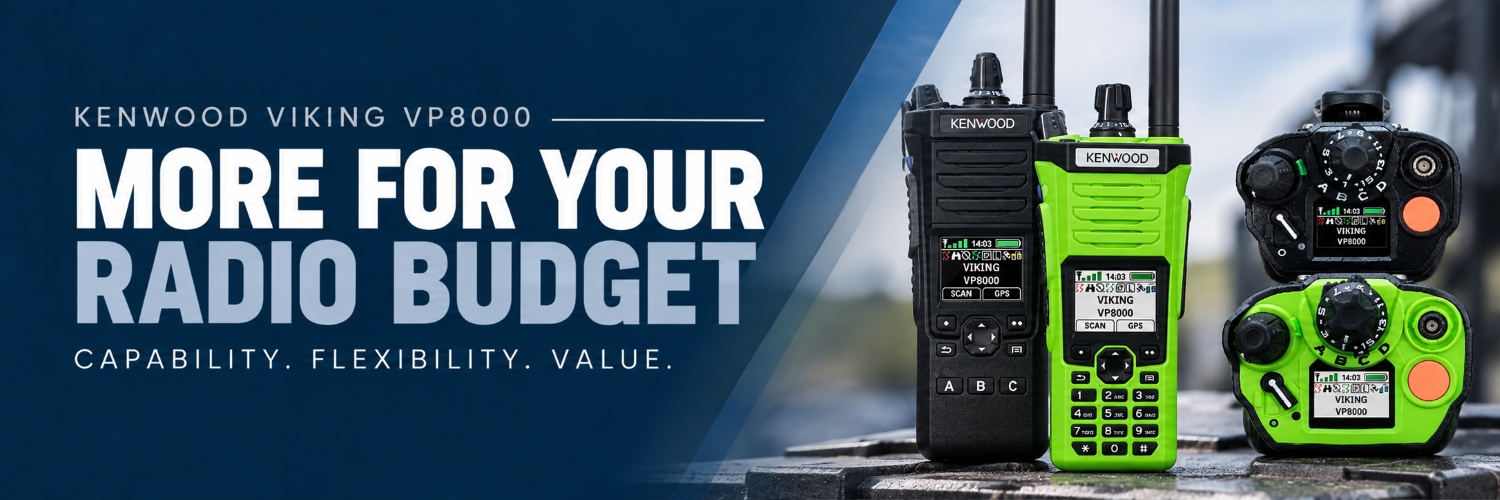
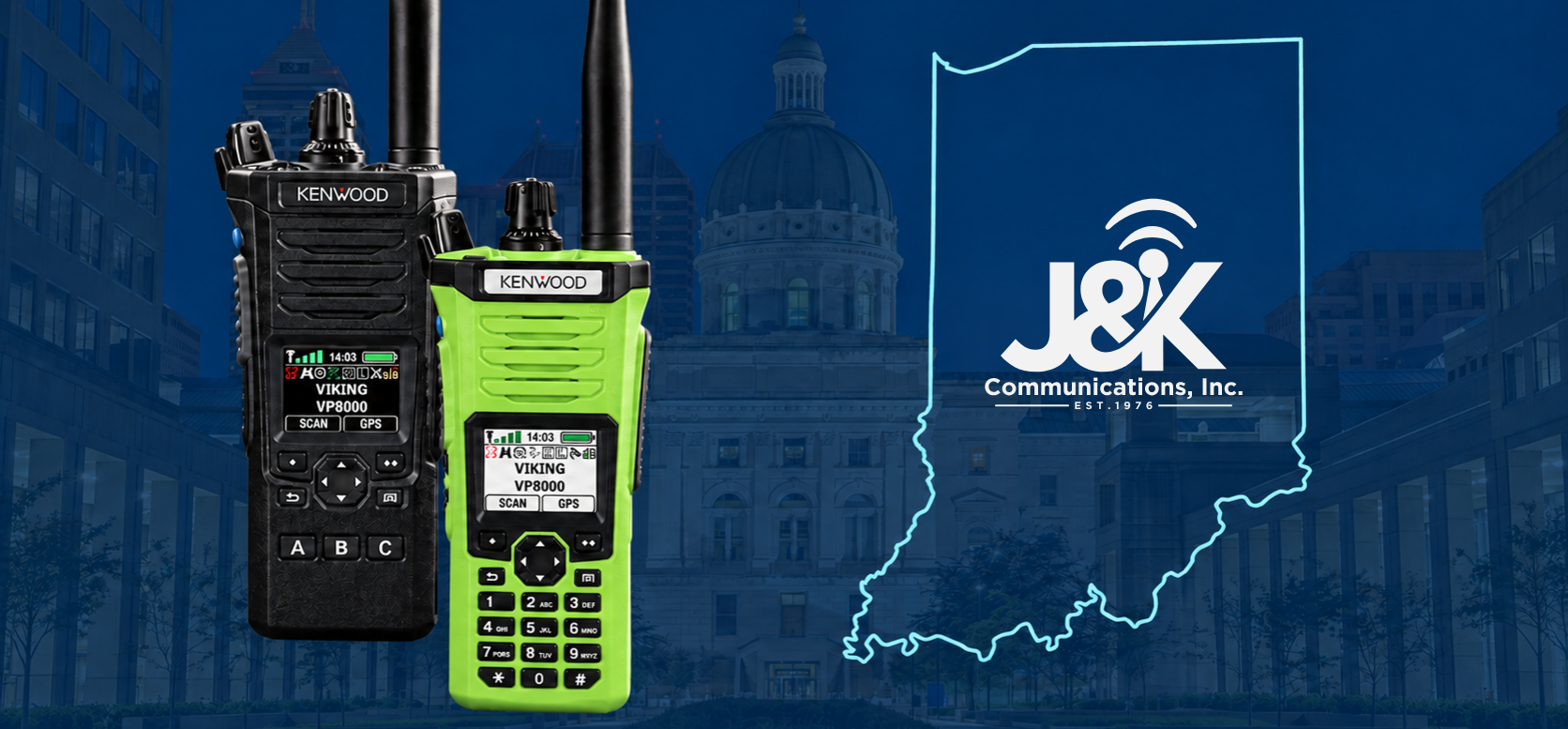
One public-safety option we offer is the KENWOOD Viking VP8000.
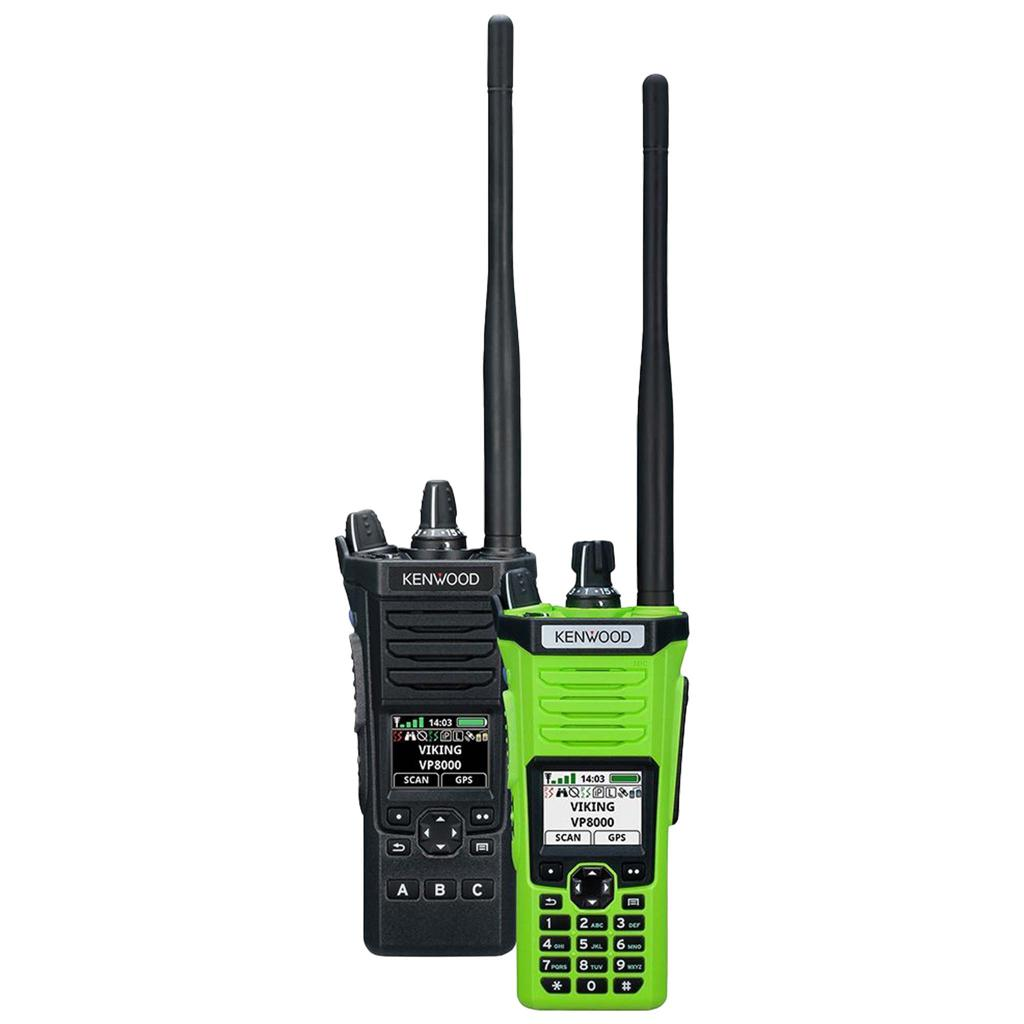
One Radio. Multiple Networks.
Multiband, multiprotocol capability in a single public-safety portable radio.
The VP8000 is a multiband, multiprotocol portable radio covering VHF, UHF and 700/800 MHz. It supports P25 Phase 1 and Phase 2 trunking, P25 conventional, DMR Tier II and Tier III, NXDN conventional and Type-C trunking, Viking16 SmartNet/SmartZone-compatible operation and analog FM.
That range of protocols gives agencies more flexibility when working across different radio systems.
The VP8000 also supports mixed-protocol zones, meaning individual channels within a zone can be configured from different supported systems.
VP8000 Protocol and System Capabilities
| Capability | KENWOOD Viking VP8000 |
|---|---|
| P25 Phase 1 Trunking | ✓ |
| P25 Phase 2 Trunking | ✓ |
| P25 Conventional | ✓ |
| DMR Tier II | ✓ |
| DMR Tier III | ✓ |
| NXDN Conventional | ✓ |
| NXDN Type-C Trunking | ✓ |
| Viking16 / SmartNet-SmartZone Compatible | ✓ |
| Analog FM | ✓ |
| Mixed-Protocol Zones | ✓ |
| VHF | ✓ |
| UHF | ✓ |
| 700/800 MHz | ✓ |
For agencies that operate exclusively on P25, that flexibility may simply provide options for the future. For organizations that communicate with departments, utilities, schools, hospitals, industrial operations or mutual-aid partners using different radio technologies, it can be much more significant.
One portable can support multiple bands and multiple protocols without forcing an organization into a single communications technology.
Security, Encryption and Public-Safety Features
The VP8000 supports AES-256 encryption, DES-OFB, ARC4 software encryption compatible with Motorola ADP, single- and multi-key operation, Over-the-Air Rekeying (OTAR), and P25 Authentication. An optional FIPS 140-3 Level 3 encryption module is also available.
Beyond encryption, available VP8000 capabilities include:
- Built-in GPS
- Bluetooth and Bluetooth Low Energy
- Dual-band 2.4 and 5 GHz Wi-Fi
- Man Down
- Instant Recording Replay
- Voice recording
- Text messaging
- Radio cloning
- FIRESafe functionality
- Up to 3-watt audio output
- IP67/IP68 ruggedization
- MIL-STD-810 C/D/E/F/G/H testing
How Does the VP8000 Compare?
Motorola and L3Harris also offer capable public-safety radios. The comparison comes down to the features an agency needs and the cost of the required configuration.
Consider three multiband public-safety portables: the KENWOOD Viking VP8000, Motorola APX 8000 and L3Harris XL-200P.
Public-Safety Portable Radio Comparison
| Capability | KENWOOD Viking VP8000 | Motorola APX 8000 | L3Harris XL-200P |
|---|---|---|---|
| P25 Phase 1 | ✓ | ✓ | ✓ |
| P25 Phase 2 | ✓ | ✓ | ✓ |
| VHF | ✓ | ✓ | ✓ |
| UHF | ✓ | ✓ | ✓ |
| 700/800 MHz | ✓ | ✓ | ✓ |
| P25 Conventional | ✓ | ✓ | ✓ |
| DMR Tier II | ✓ | Not listed | Not listed |
| DMR Tier III | ✓ | Not listed | Not listed |
| NXDN Conventional | ✓ | Not listed | Not listed |
| NXDN Type-C Trunking | ✓ | Not listed | Not listed |
| Analog Operation | ✓ | ✓ | ✓ |
| AES-256 | ✓ | ✓ | ✓ |
| DES-OFB | ✓ | ✓ | ✓ |
| OTAR | ✓ | ✓ | ✓ |
| P25 Authentication | ✓ | ✓ | Available / configuration dependent |
| GPS | ✓ | ✓ | ✓ |
| Bluetooth | ✓ | ✓ | ✓ |
| Wi-Fi | ✓ | ✓ | Available / configuration dependent |
| Mixed-Protocol Zones | ✓ | Not listed | Not listed |
Disclaimer: Product specifications and capabilities are based on publicly available manufacturer information and may vary depending on model configuration, software, licensing, and optional features. Information is provided for general comparison purposes and is subject to change. Buyers should verify current specifications and compatibility with the respective manufacturer before purchasing.
Better Value: Why Pay More for a Name?
Once the required capabilities are established, the next step is comparing the cost of equivalent configurations.
Even a modest per-radio price difference adds up when an agency is replacing an entire fleet.
For every 100 radios purchased, a $1,000 difference per radio becomes $100,000 before accessories, software, programming and other costs are considered.
For purchases funded with public money, it is worth identifying exactly what additional capabilities or services a higher-priced proposal includes.
What That Can Mean Across a Fleet
| Approximate Comparable Purchase | Approximate VP8000 Purchasing Power* |
|---|---|
| 10 radios | ≈25 VP8000s |
| 20 radios | ≈50 VP8000s |
| 40 radios | ≈100 VP8000s |
| 100 radios | ≈250 VP8000s |
*Illustrative quantities based on J&K’s approximately 2.5:1 current pricing comparison. Actual pricing varies by configuration, software, accessories, contract, quantity and customer eligibility. This comparison is based on internal pricing research and equipment evaluations conducted by J&K Communications. Actual pricing varies by configuration and purchasing requirements.
For larger fleets, that difference could mean purchasing more subscriber units within the same budget.
You’re Paying for the Radio, Not the Name
A well-known brand may be familiar to a department, but familiarity alone does not establish that a particular configuration is the best fit.
Procurement teams should compare the included features, licenses, accessories, warranty terms and service costs before approving a purchase.
If two configurations meet the same operational requirements, a substantial price difference deserves a closer look. Ask what is included in each quote and whether the added cost provides a measurable benefit.
The lowest price is not always the best choice. The objective is to get the required capability and long-term support at a reasonable total cost.
Local Support: Your Radio Company Should Know Indiana
Specifications and purchase price are important, but agencies also need to know who will program, maintain and repair their equipment over time.
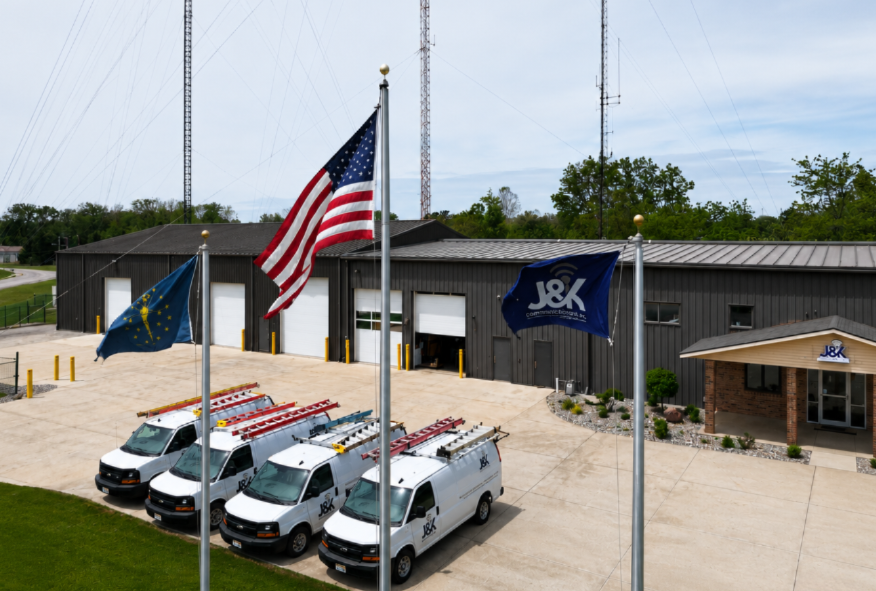
Ask about service, repairs and ongoing support, too.
Over time, radios need replacement batteries, programming updates and repairs. Agencies add personnel, vehicles and talkgroups. Systems may expand or require firmware updates. Having a service team familiar with the equipment can make those changes easier to manage.
J&K operates four locations across Indiana in Columbia City, Fort Wayne, Kokomo and Indianapolis. Our team provides radio sales, system design, installation, programming, fleet management, maintenance, repair and infrastructure support.
That means customers can work with J&K for the initial purchase and for the programming, maintenance and repair work that follows.
50 Years of Indiana Roots
Radio technology and our service area have changed since 1976, but J&K is still family-owned and based in Columbia City.
Today we operate four Indiana locations and work with public-safety agencies, schools, businesses, utilities and local governments throughout Indiana and the Midwest. Some of those customer relationships span generations.
J&K is based in Indiana, with local staff and facilities supporting customers here and across the Midwest.
Why This Matters in Indiana Right Now
Indiana agencies also have a technical consideration to factor into their next radio purchase: planning for potential changes to the statewide SAFE-T system.
Indiana’s statewide SAFE-T network currently operates as a P25 Phase 1 700/800 MHz system. According to Indiana’s 2024 Statewide Communication Interoperability Plan, SAFE-T includes more than 191 tower sites and supports more than 105,000 subscriber radios used by local, state and federal first responders.
Indiana is also preparing for the possibility of a transition to P25 Phase 2, or TDMA.
The state’s interoperability plan specifically identifies a technology goal that all public-safety radios be capable of operating in a TDMA environment.
In October 2025, the Indiana Integrated Public Safety Commission announced that tower sites in Fort Wayne and at Westville Correctional Facility had been approved for P25 Phase 2/TDMA testing.
Existing Phase 1 radios continue to work normally during the testing period. A statewide transition will not happen overnight.
Agencies purchasing radios now should account for that possibility when evaluating supported P25 modes.
P25 Phase 1 vs. P25 Phase 2
| Technology | P25 Phase 1 | P25 Phase 2 |
|---|---|---|
| Access Method | FDMA | 2-Slot TDMA |
| Channel Bandwidth | 12.5 kHz | 12.5 kHz |
| Voice Paths per 12.5 kHz Channel | 1 | 2 |
| Current SAFE-T Operation | Yes | Pilot testing / planning |
| Indiana Long-Term Consideration | Yes | Yes |
For agencies purchasing equipment now, P25 Phase 2 capability is worth confirming before a fleet order is placed.
Ask vendors to identify the Phase 2 capabilities included in the proposed configuration.
The Viking VP8000 supports both P25 Phase 1 and P25 Phase 2.
Senate Enrolled Act 1 Makes Value Even More Important
Indiana local governments are also adjusting to changes in property taxes and local government finance.
Senate Enrolled Act 1 was signed into law on April 15, 2025 , making substantial changes affecting property taxes and local government finance.
The financial effect varies by community, so each agency will need to assess purchases against its own budget.
Police, fire and EMS departments still need dependable communications equipment, and local governments must continue maintaining their systems and replacing aging units.
When budgets are constrained, comparing equivalent equipment configurations can help agencies determine how many units they can afford.
If two proposed solutions meet the same requirements but one allows an agency to purchase substantially more radios, that difference belongs in the procurement discussion.
Keep Indiana Communications Dollars in Indiana
Local service capacity is another factor worth considering alongside price and specifications.
What does local support look like?
When an Indiana-based provider can meet the technical requirements at a competitive price, its local service capabilities deserve consideration.
Consider where programming, repairs and system support will be performed.
J&K employs technicians and support staff in Indiana and maintains facilities across the state. That gives customers a local point of contact for equipment purchases and ongoing service.
Being local is not a substitute for meeting specifications or offering competitive pricing. It is an additional consideration when evaluating the complete proposal.
For J&K, the case rests on the equipment, the cost and the service available after installation.
Indiana Has a Choice
Indiana agencies have good reason to review their radio purchasing plans over the next several years.
SAFE-T currently supports more than 105,000 subscriber radios. Indiana is testing P25 Phase 2/TDMA and planning for the possibility of a broader transition. State communications planning calls for TDMA-capable subscriber equipment. At the same time, local governments are taking an increasingly close look at how available dollars are spent.
Before replacing a fleet, agencies can use the procurement process to compare available radio platforms rather than automatically repeating a previous purchase.
Ask each vendor to show how its proposed radios meet your operating requirements, what is included in the quoted price and what support will be available over the equipment’s life.
With those details in hand, compare the total cost and the number of radios each proposal allows the agency to purchase.
Frequently Asked Questions About Public-Safety Radios
Answers to common questions about P25 radio compatibility, equipment pricing, and purchasing public-safety radios in Indiana.
What should Indiana agencies consider when purchasing P25 radios?
Agencies should evaluate P25 Phase 1 and Phase 2 support, frequency bands, interoperability, encryption requirements, software licensing, equipment pricing, and local service availability. The best choice depends on the agency’s existing radio system and operational requirements.
Can the KENWOOD Viking VP8000 operate on Indiana’s SAFE-T system?
The Viking VP8000 supports P25 Phase 1 and Phase 2 communications. Operation on Indiana’s SAFE-T network depends on the required configuration, programming, system authorization, and applicable network requirements. J&K Communications can help agencies evaluate compatibility before purchasing.
How does Viking VP8000 pricing compare with Motorola radios?
Based on J&K Communications’ internal pricing research, the cost of one comparably configured Motorola public-safety portable can approach the cost of approximately 2.5 Viking VP8000 radios. Actual pricing depends on equipment configuration, software, accessories, quantity, and purchasing requirements.
Where can Indiana agencies purchase and service public-safety radios?
J&K Communications supplies and services public-safety radio equipment throughout Indiana, with locations in Columbia City, Fort Wayne, Kokomo, and Indianapolis. Agencies can work with J&K to evaluate equipment, compare purchasing options, and arrange local technical support.
Better Products. Better Value. Local Support.
J&K offers public-safety and business radio equipment backed by installation, programming, maintenance and repair services from our Indiana locations.
We have provided communications equipment and service from Indiana since 1976.
For agencies evaluating the Viking VP8000, our current pricing comparison shows why it is worth requesting a quote alongside other multiband public-safety portables.
We welcome the opportunity to compare the equipment, features and total cost against your current proposal.
Request a Side-by-Side Comparison
Tell us what radios you currently use, what your fleet needs or what you have been quoted. We can prepare a side-by-side comparison of equipment, capabilities and cost for your review.
Family-owned in Indiana since 1976.
Columbia City | Fort Wayne | Kokomo | Indianapolis
Sources: EFJohnson / JVCKENWOOD Viking VP8000 product information; Motorola Solutions APX 8000 product information and specifications; L3Harris XL Converge 200P product information and datasheet; Indiana Statewide Communications Interoperability Plan (2024); Indiana Tactical Interoperable Communications Plan (2024); Indiana Office of Emergency Communications — SAFE-T system information; Indiana SAFE-T Authorized Subscriber Equipment List; Indiana Office of Emergency Communications — resources and planning documents; CISA Statement of Project 25 (P25) User Needs; Indiana Department of Local Government Finance — SEA 1 and local income tax legislation (June 2025); Indiana Department of Local Government Finance — SEA 1 property tax credits and deductions (June 2025); J&K Communications company history, service information and internal public-safety radio pricing comparisons. Notes: The approximately 2.5-to-1 pricing comparison is based on J&K Communications’ internal research and is not an independently verified manufacturer price ratio. Radio features, licenses, pricing, SAFE-T authorization and statewide transition plans may change. Agencies should confirm current requirements with the Indiana Office of Emergency Communications. The article’s reference to specific October 2025 Phase 2 test locations should be checked against the original announcement before being treated as independently verified.