If an agency is looking at new P25 radios or planning a system upgrade, Phase 1 vs. Phase 2 is usually one of the first questions that comes up.
It sounds like a simple choice between an older version and a newer one. It really isn’t.
Phase 2 can give a trunked P25 system more voice capacity, but that does not mean every Phase 1 system needs to be replaced. It also does not mean that buying a radio marked “P25 Phase 2 capable” guarantees it will work on a particular system.
Before making that decision, it helps to understand what actually changes between the two phases and what stays the same.
The Short Answer
P25 Phase 1 uses Frequency Division Multiple Access (FDMA), with one voice path in a 12.5 kHz radio channel. P25 Phase 2 uses two-slot Time Division Multiple Access (TDMA) on trunked traffic channels, allowing two voice conversations to share that same 12.5 kHz channel.
For an agency, the big difference is capacity. Phase 2 can allow more simultaneous voice traffic within the available spectrum. It should not be viewed as an automatic fix for coverage, in-building performance or radio compatibility.
First, What Is P25?
Project 25, usually shortened to P25, is a set of standards for digital land mobile radio systems used by public safety and government agencies.
The standards are important because they give agencies and manufacturers a common framework for radio communications and interoperability. They do not make every P25 radio or system identical.
That second part causes quite a bit of confusion.
Two radios can both support P25 and still have different frequency bands, software options, encryption capabilities, trunking features or system requirements. The radio also has to be programmed and authorized for the network where it will be used.
P25 systems can also be conventional or trunked, which becomes especially important when talking about Phase 2.
P25 Phase 1 vs. Phase 2 at a Glance
| Consideration | P25 Phase 1 | P25 Phase 2 |
|---|---|---|
| Channel-access method | FDMA | Two-slot TDMA on trunked traffic channels |
| Voice paths in 12.5 kHz | One | Two |
| Spectrum efficiency | 12.5 kHz efficiency | 6.25 kHz equivalent efficiency |
| Conventional operation | Supported | Phase 2 TDMA is not used for conventional P25 voice operation |
| Trunked operation | One FDMA voice call per 12.5 kHz traffic channel | Two TDMA voice calls can share a 12.5 kHz traffic channel |
| Why an agency might use it | Standards-based P25 digital voice and interoperability | Additional voice capacity and greater spectrum efficiency |
| Phase 1 subscriber support | Native Phase 1 operation | Phase 2 infrastructure can support Phase 1 channel modes when the system is configured for them |
How P25 Phase 1 Works
With P25 Phase 1, an active voice call uses one 12.5 kHz radio channel.
On a trunked system, the infrastructure assigns an available traffic channel when a user presses the push-to-talk button. Once the transmission ends, that resource can be made available for another call.
A conventional P25 system works differently. Users operate on assigned channels rather than having the trunked system dynamically assign a traffic channel for each call.
Phase 1 is still a practical system for many agencies. If there is enough capacity for the number of users and calls being handled, and the existing equipment continues to meet the agency’s needs, there may not be an operational reason to change phases just because Phase 2 exists.
What Changes With P25 Phase 2?
Phase 2 changes how voice traffic uses a trunked radio channel.
Instead of one conversation occupying the full 12.5 kHz traffic channel, TDMA divides access into two alternating time slots. One conversation can use one slot while another conversation uses the other.
The switching happens quickly enough that the person using the radio still experiences normal push-to-talk communication. The work of managing those time slots is happening behind the scenes.
One channel. Two voice paths.
That is the easiest way to think about the main Phase 2 difference. The agency is not getting two new frequencies. Phase 2 is making more efficient use of the 12.5 kHz traffic channel that is already available.
Where the Extra Phase 2 Capacity Matters
For a smaller system that rarely runs short on traffic channels, extra capacity may not be a major issue.
That can change pretty quickly on a busy system.
Think about a severe-weather event, large fire, multi-agency response or another incident where several talkgroups become active at once. If the available traffic resources are already being used, another radio user may have to wait for a channel to become available.
Phase 2 gives system planners another way to increase the amount of voice traffic the available spectrum can handle.
That does not mean capacity suddenly becomes unlimited. The number of sites and traffic channels still matters. So do the number of users, talkgroups, busy-hour traffic, mutual-aid activity and the way the system is designed.
If an agency is considering Phase 2 because the existing system gets busy, those are the numbers worth looking at.
Will P25 Phase 2 Improve Radio Coverage?
This is an important distinction because “upgrade” can make it sound like everything should get better.
Phase 2’s main advantage is not additional geographic coverage.
Radio coverage still depends on the system around it, including:
- Frequency band
- Tower and antenna locations
- Antenna height and system losses
- Transmitter and receiver performance
- Terrain and vegetation
- Building construction
- In-building signal loss
- Simulcast and multi-site design
- Whether personnel are using portable, mobile or fixed equipment
If portable radios already have trouble in the basement of a courthouse or inside a certain school building, moving voice traffic to Phase 2 does not automatically remove that dead area.
The same goes for audio. Speaker output, accessories, background noise, radio configuration and the system itself can all affect what the user hears.
A coverage problem needs to be treated as a coverage problem
If an agency is dealing with dead zones or weak portable performance, it helps to find out why before replacing equipment. The issue may be related to site placement, antennas, infrastructure or building penetration rather than the Phase 1 subscriber radios themselves.
Can Phase 1 Radios Still Work on a Phase 2 System?
They can in the right system configuration, which is one reason agencies can sometimes move toward Phase 2 without replacing an entire radio fleet on the same day.
Phase 2 systems support Phase 1 channel modes. That can allow compatible Phase 1 subscriber radios to continue operating while Phase 2-capable subscribers use TDMA traffic where the system is configured to support it.
But this is where the word “compatible” needs some attention.
Before assuming an existing radio can stay in service, check:
- The radio’s frequency band
- Whether it supports the required P25 trunking features
- Whether Phase 2 capability is included and enabled when needed
- The radio model and firmware requirements
- Encryption and key-management requirements
- System keys, talkgroups and programming
- Whether the system administrator permits that radio on the network
Seeing “P25” printed on the radio is not enough to answer all of those questions.
Conventional P25 and Trunked P25 Are Not the Same Thing
This is worth understanding before buying Phase 2-capable radios.
With conventional P25, users operate on predetermined radio channels. That can work well for direct communications, localized systems, mutual-aid channels and other operations that do not need a trunked system assigning traffic resources.
Trunked P25 handles channel access differently. Users select talkgroups, and the system manages the available resources and assigns a traffic channel when somebody transmits.
Phase 2 TDMA applies to trunked P25 traffic-channel operation.
So if an agency is currently operating conventional P25 channels, simply purchasing Phase 2-capable portable radios does not turn those conventional channels into Phase 2 TDMA channels. The subscriber radio and the radio system are two different parts of the equation.
What Does “P25 Phase 2 Capable” Mean on a Radio?
It means the portable or mobile radio has the technical capability to operate on supported P25 Phase 2 trunked systems when the required features are enabled and the radio is properly programmed.
It does not mean you can take that radio to any P25 system in the country and immediately use it.
Frequency band is one obvious reason. A radio built for one band cannot simply operate on another because both systems happen to use P25.
Software features matter too. So can encryption, trunking options, firmware, system programming and administrator authorization.
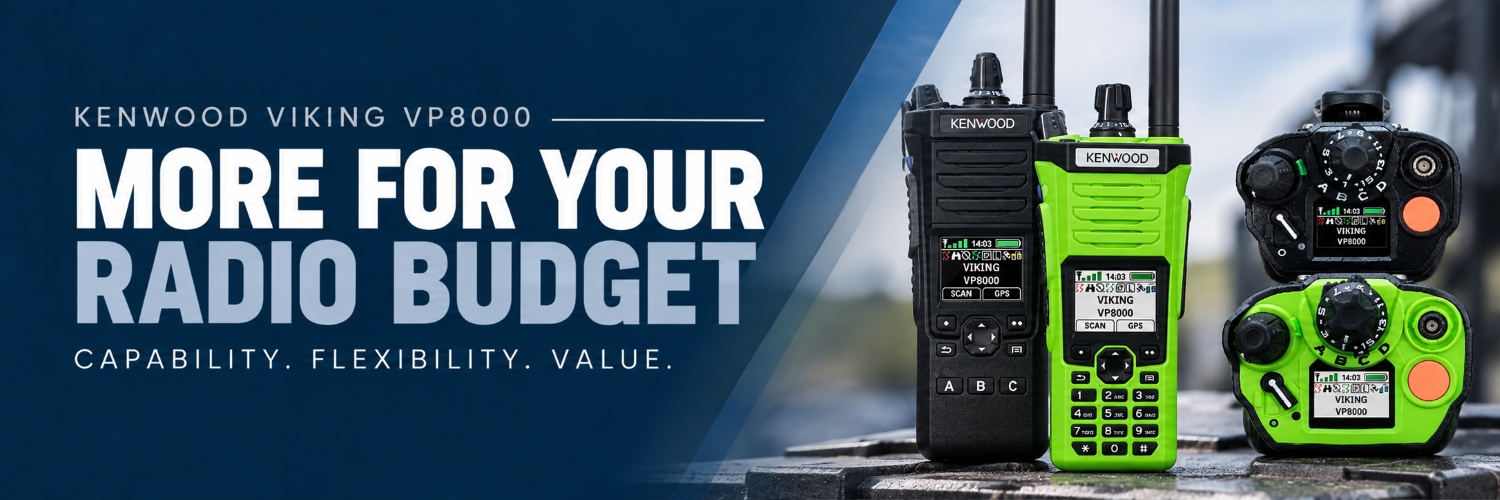
Current KENWOOD Viking subscriber products include radios designed for P25 Phase 1 and Phase 2 trunking. The Viking VP8000, for example, supports multi-band, multi-protocol operation. Other Viking radios have different band and feature combinations.
The better question when looking at a subscriber radio is not just, “Does it support Phase 2?” It is, “Does this radio support what our system requires?”
What Is P25 CAP and Why Should an Agency Care?
The P25 Compliance Assessment Program, or P25 CAP, gives public-safety agencies a way to review testing and documentation related to P25 standards compliance.
Testing is performed through laboratories recognized by the Department of Homeland Security, and participating suppliers provide compliance documentation for applicable equipment.
That gives an agency something more useful to review during procurement than a product page that simply says a radio is “P25 compatible.”
Grant-funded purchases can add another layer. Agencies using federal grant money should review the current requirements and applicable approved-equipment information before the purchase is finalized.
When Is It Worth Looking at P25 Phase 2?
There is no rule that says every Phase 1 agency needs to move to Phase 2 by a certain point simply because it is newer technology.
The conversation becomes more relevant when something about the existing system is changing.
Maybe traffic channels are becoming busy more often. Maybe another department is joining the system. The agency could be replacing aging infrastructure, adding users or participating in a larger regional migration.
Those are practical reasons to take a closer look.
Other situations may include:
- Growth in users or talkgroups
- Not enough traffic-channel capacity during busy periods
- A planned trunked-system modernization
- A regional or statewide transition
- A need for 6.25 kHz equivalent spectrum efficiency
- Aging or unsupported infrastructure
- Subscriber radios that are already due for replacement
On the other hand, if a Phase 1 system has enough capacity, provides the coverage the agency needs and remains supportable, replacing it solely to say the system is Phase 2 may not accomplish much.
You may not have to replace everything at once
Depending on the existing infrastructure and radio fleet, an agency may be able to start purchasing Phase 2-capable subscriber radios before all system traffic moves to Phase 2. That needs to be checked against the actual system configuration rather than assumed.
Before Buying P25 Radios or Planning an Upgrade, Start Here
An agency does not need every technical answer before starting the conversation. But there are a few things worth getting on the table early.
- Is the current P25 system conventional or trunked?
- Does the infrastructure currently support Phase 1, Phase 2 or both?
- Which frequency band or bands are being used?
- Are users running into traffic-capacity problems?
- Are there radio coverage problems?
- Which existing portable and mobile radios are still in service?
- Are those radios still supported?
- What encryption requirements does the agency have?
- Which neighboring or mutual-aid systems need to be considered?
- Is the agency planning to add users, departments or sites?
- Will grant funding be involved?
- Does the transition need to happen at once, or could it be phased?
Those answers help separate a capacity problem from a coverage problem and a subscriber-radio issue from an infrastructure issue.
That distinction can save an agency from replacing equipment that was not actually causing the problem.
Frequently Asked Questions About P25 Phase 1 and Phase 2
What is the main difference between P25 Phase 1 and Phase 2?
P25 Phase 1 uses FDMA and provides one voice path in a 12.5 kHz channel. P25 Phase 2 uses two-slot TDMA on trunked traffic channels, which allows two voice paths to share the same 12.5 kHz channel.
Is P25 Phase 2 better than Phase 1?
It depends on what the agency needs. Phase 2 provides additional voice capacity and greater spectrum efficiency. If a Phase 1 system already has enough capacity and is meeting the agency’s needs, moving to Phase 2 may not be necessary simply because it is newer.
Does P25 Phase 2 have better coverage?
Not automatically. Coverage depends on the frequency band, infrastructure, tower and antenna locations, terrain, building construction and other parts of the radio system. Phase 2’s primary advantage is additional capacity rather than greater geographic coverage.
Can P25 Phase 1 radios work on a Phase 2 system?
Compatible Phase 1 subscribers can operate on Phase 1 channel modes supported by a properly configured Phase 2 system. The individual radio’s frequency band, features, programming, firmware and system authorization still need to be verified.
Does a Phase 2 radio work on every P25 system?
No. “P25 Phase 2 capable” does not guarantee universal compatibility. Frequency band, trunking features, encryption, programming, firmware and the requirements of the individual radio system all matter.
Can a conventional P25 system use Phase 2 TDMA?
P25 Phase 2 TDMA is used for trunked traffic-channel operation. Buying Phase 2-capable subscriber radios does not convert an existing conventional P25 channel into Phase 2 TDMA operation.
The Bottom Line
If you are comparing P25 Phase 1 and Phase 2, start with why you are looking at a change in the first place.
If the issue is traffic capacity, Phase 2 may give the system more room to work with. If the problem is poor coverage inside a building, that needs a different conversation. And if the concern is whether existing radios will continue to work, the subscriber equipment and system configuration need to be checked before anything is purchased.
Phase 2 is a useful option, but the phase alone does not tell you whether a radio or system is the right fit.
Look at the system you have, the problems you are trying to solve and what the agency will need several years from now. Then make the equipment decision. For a broader look at equipment choices, see our guide to public-safety radios in Indiana.
Have Questions About Your P25 System?
You do not need to know whether Phase 1 or Phase 2 is the answer before contacting us.
Tell J&K what system and radios you are using now, what is changing and where you are running into problems. Our team can help you work through compatibility, subscriber equipment and P25 system options.
Talk With a P25 Expert Call 260-244-7975